Our
Projects
We are interested in all topics related to scleractinian corals and anthozoans in general. Our team perform research in many fronts, including taxonomy, ecology, evolution, conservation, evo-devo and more...
Integrating tools and disciplines to understand the future of Southwestern Atlantic shallow-water corals in a changing planet
Endeavoring to improve our understanding in how climate change has and is shaping SWA coral evolution as a lineage and as a system, the present project consists of consolidating an interdisciplinary research line cored on RNA/DNA deep sequencing to determine connectivity and genes under positive evolution.
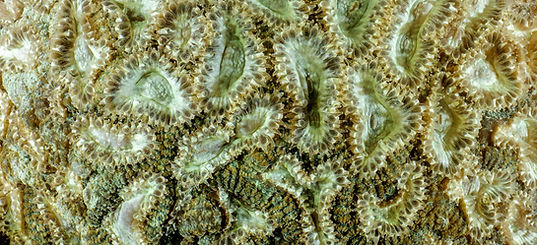
Phylogenomics of the Order Scleractinia (Cnidaria, Anthozoa): relationships between evolution and climate change
Using NGS platforms, this project aims to partially sequence the genome from 200 scleractinian species (symbiotic [100] and aposymbiotic [100]) in order to reconstruct a robust evolutionary history of the order, shedding light into its relationships to Corallimorpharia as well as within scleractinian “sub-orders” and families.

New Caledonia Deep-water Scleractinia
Intending to demonstrate how diverse the azooxanthellate scleractinian fauna is within the New Caledonian Economic Exclusive Zone, and how important this area is for the knowledge regarding the western Pacific azooxanthellate corals, the present project aims to report on all known (62 – excluding those not identified to species level) and new occurrences of cold-water Scleractinia from this region.

Coral microbiota
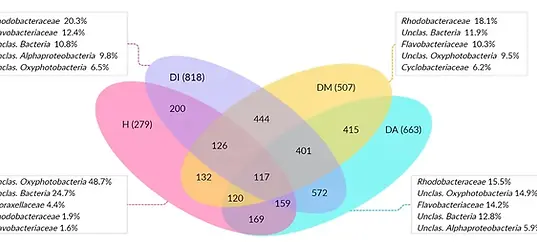
While previous studies have revealed that thousands of species belonging to almost all known phyla live in close association within shallow and deep-water coral reefs, the true biological diversity of these ecosystems is still not yet known. Very little is known about the existence and importance of the microbial communities within these highly valuable ecosystems, but evidences suggest that like all other environments on earth, the microbial diversity plays key ecological and functional roles. Therefore this project aims to determine the microbial communities associated with deep-sea corals and coral reefs.
Molecular, biological and ecological aspects of the invasive Tubastraea species
Known as highly competitive invasive species that are spreading fast throughout the Atlantic Ocean, T. coccinea and T. tagusensis have been first reported in Brazilian waters in 2004 (Paula and Creed, 2004), although the genus occurrence for this area date back to the 1980’s (Castro and Pires 2001). Since then, T. coccinea has been reported from over 3,000 km of Brazilian coast, and predictions show a high potential for this species to colonize all the way down to the southernmost coast of Brazil (Riul et al., 2013). The same applies to T. tagusensis, which has successfully colonized man-maid structures and rocky shores along the Brazilian coast.
The present project aims to add to the current knowledge on these invasive species regarding their molecular aspects, morphology, and ecological adaptations.

Daily rhythms on zooxanthellate and azooxanthellate corals, an integrative approach of gene expression, microbiome, physiology and environmental parameters
Environmental rhythms regulate the behavior and physiology of all living organisms. The most conspicuous rhythm is the light:dark cycle, regulating metabolic states, physiologic process, reproduction, and behavioral activities either by an endogenous circadian clock or as a simple response to light. The circadian clock mechanism as well as gene expression profiles are widely known for model organisms, but it has been explored for cnidarians only in the last few decades. Here we propose an unprecedented approach, in which the symbiont is isolated from the coral tissue after collection for an independent evaluation of the gene expression, microbiome, and physiological parameters of both parts in symbiosis, correlating them with environmental variables. The results will serve as a baseline about the functioning of healthy corals and how the host coral and its symbionts respond to the light:dark cycle.
